🎃 Plus: Pumpkin Picasso | Wednesday, October 28, 2026
1 big thing: Twin victory speeches
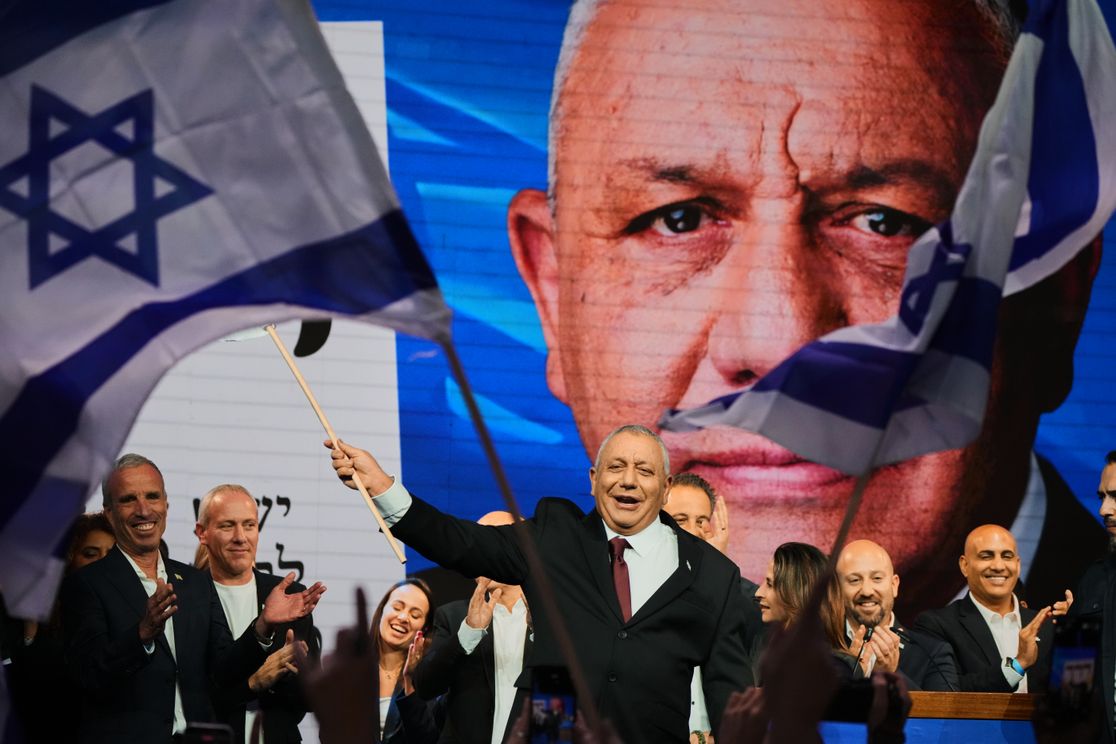
Gadi Eisenkot, leader of the Yashar party, waves an Israeli flag onstage following the release of the first exit poll in Israel's general election in Tel Aviv last night. Photo: Ariel Schalit/AP
Axios' Barak Ravid reports from Tel Aviv:
Prime Minister Benjamin Netanyahu's far-right coalition was running nearly even with Gadi Eisenkot's opposition bloc as vote counting continued today — but both are short of a 61-seat majority.
- Why it matters: Political stalemate is the most likely outcome of yesterday's historic election, with Netanyahu weakened but neither side having a clear path to forming a coalition government. Weeks of negotiating could lie ahead.
Arab parties are poised to win 18 to 19 seats in what would be an unprecedented electoral achievement.
- Theoretically, Eisenkot's bloc could try to swear in a minority government supported by the two Arab parties. But that looks unlikely.
📊 State of play: A close outcome could leave the country in a state of limbo, with Netanyahu likely staying on as a caretaker prime minister at the helm of the executive branch and the opposition led by Eisenkot controlling the Knesset.
- That scenario could last until new elections, possibly as early as April.
- The two sides could try to break the deadlock by forming a unity government between Netanyahu and Eisenkot. But that's improbable, since none of the opposition parties will agree to sit in a Netanyahu-led government.
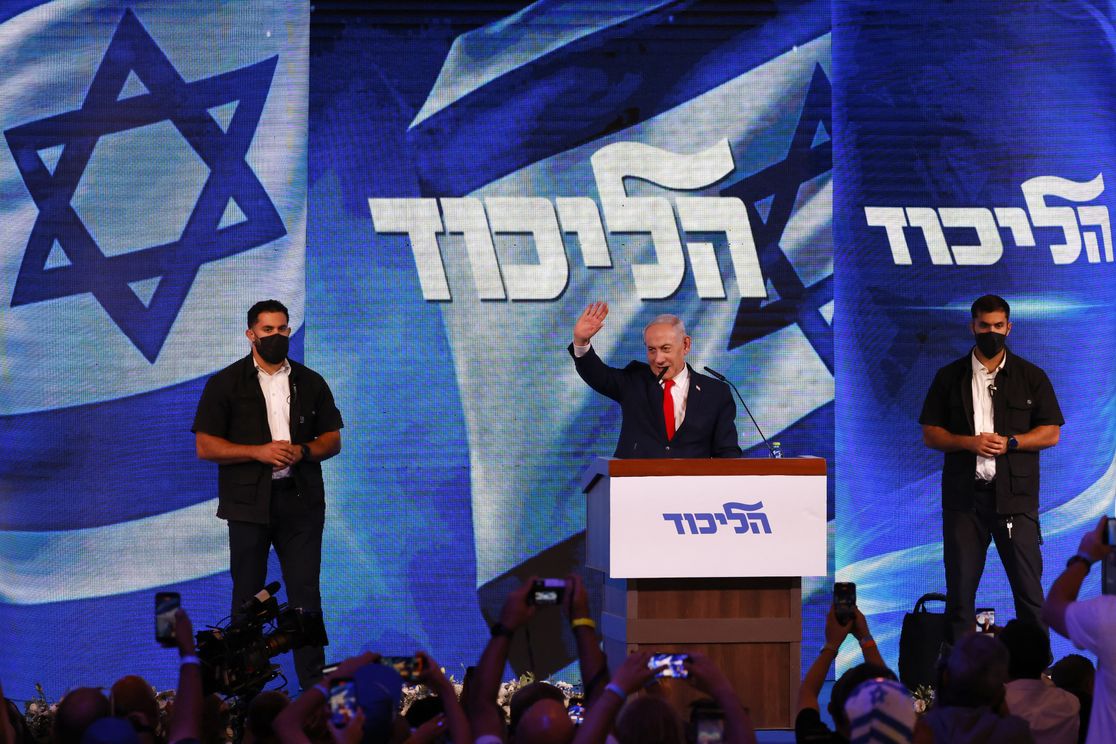
Israeli Prime Minister Benjamin Netanyahu speaks at an election-night rally in Jerusalem. Photo: Jalaa Marey/AFP via Getty Images
🔎 Zoom in: Eisenkot claimed victory in a speech after midnight Israeli time. He said if Netanyahu was a "decent leader," he'd leave the political stage after the public voted for change.
- Eisenkot alluded to the possibility that the prime minister would launch military action before a new government is seated. "Netanyahu, don't dare use Israel's security for your political needs," Eisenkot said.
After 3 a.m. Israeli time, Netanyahu took the stage and also claimed victory:
- "We are still waiting for the official election results. Likud is the largest party in Israel. The right-wing bloc has a clear, decisive majority among the Zionist public and among the Jewish population as a whole."
2. 🗳️ Election security blind spots
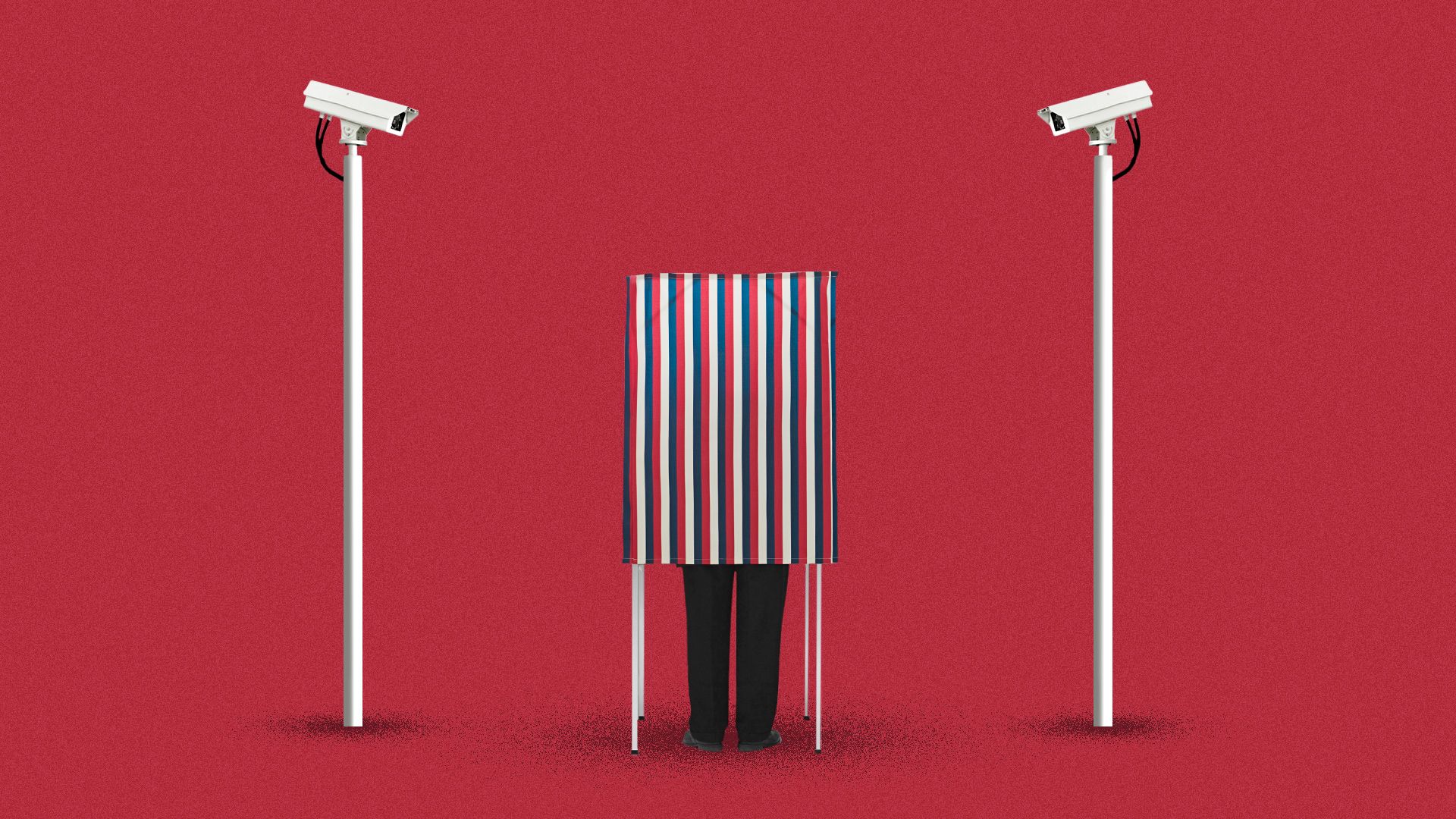
Illustration: Aïda Amer/Axios. Stock: Getty Images
Some of the biggest vulnerabilities in election security are lying in plain sight, Axios' Brittany Gibson writes.
- Why it matters: There's no credible evidence that voting-system vulnerabilities have been exploited to change election results. But researchers have found isolated flaws that threaten ballot secrecy, accurate vote recording and independent verification of results.
🔎 Election security experts interviewed by Axios found these vulnerabilities in parts of the U.S.:
1. Paperless voting: Louisiana is the last remaining state to use paperless voting machines statewide on Election Day. Voters press buttons to select their candidates, and the machines record their votes electronically without producing a paper ballot.
- That leaves no independent record to check whether votes were counted correctly.
2. Ballot-marking devices (BMDs) let voters select candidates on a touchscreen before printing a paper ballot. Researchers warn the machines are vulnerable to hacking and errors, and studies show voters often miss mistakes on the printout.
- Roughly 23% of U.S. registered voters live in jurisdictions that exclusively use BMDs for in-person voting, according to the nonprofit Verified Voting.
3. A software flaw in Georgia's vote-counting system could be used to expose how individual voters cast their ballots, according to research from Princeton University.
- Researcher Max Springer used public voter records and roughly $20 in AI credits to reconstruct the order in which nearly all in-person ballots were cast in the Georgia counties he studied.
- With an additional public record, Springer matched individual voters to their ballots, as he showed with two counties and 2,200 votes in his study.
Keep reading.
3. 🥕 New Dem push for MAHA voters
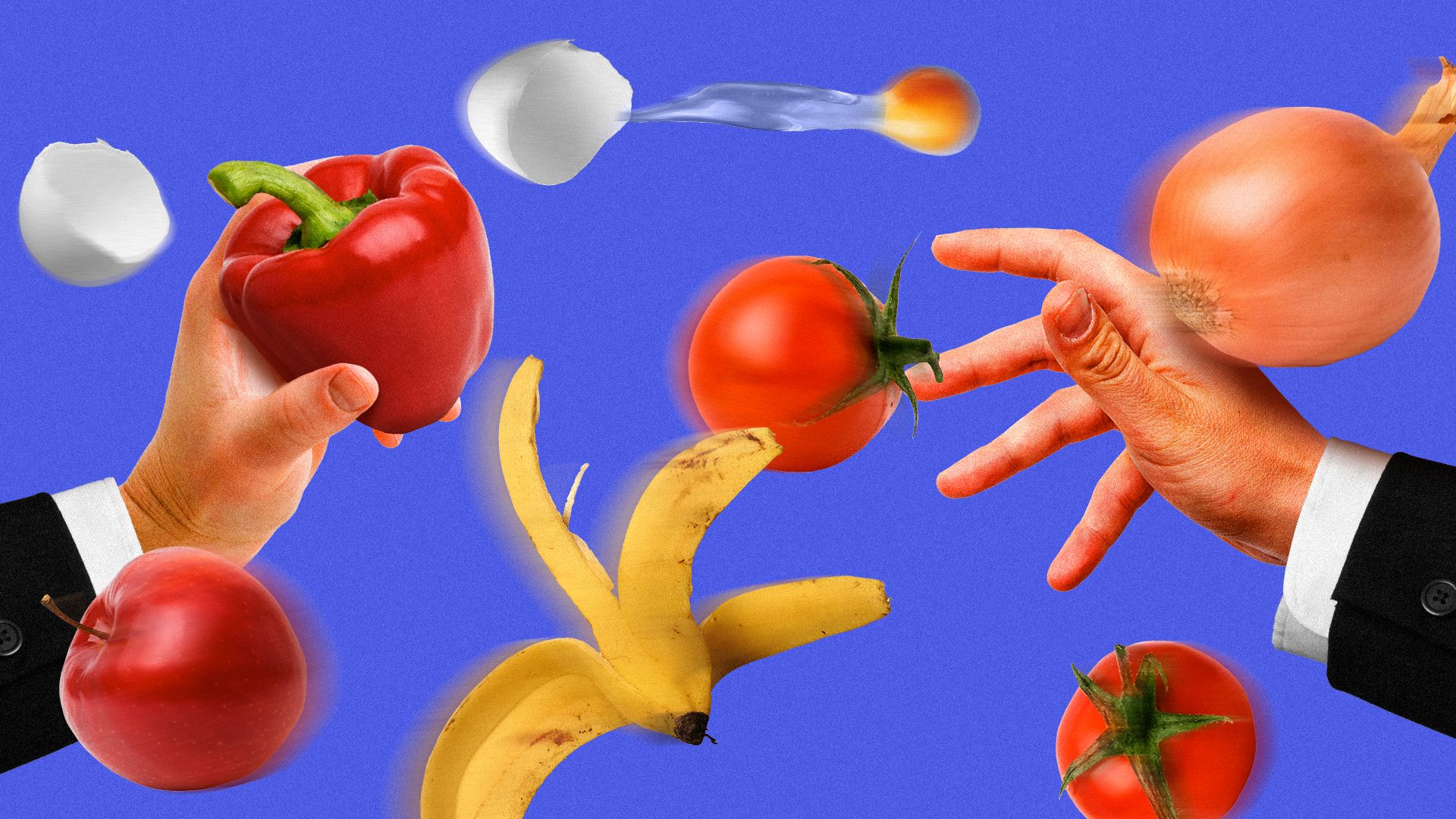
Illustration: Lindsey Bailey/Axios
Some Democrats are courting the "Make America Healthy Again" base, hoping pitches on food safety and environmental health will attract voters disillusioned with the Trump administration's lack of progress, Axios' Caitlin Owens writes.
- Why it matters: Policies around cleaning up the food supply and agricultural practices helped forge a coalition that's credited with helping President Trump win a second term.
Some Democrats say they're better positioned to take on established interests through regulation and are honing messaging ahead of the 2028 presidential race.
- The Center for American Progress, a progressive think tank, recently released a proposal focused on healthier foods and reducing harmful chemicals alongside polling showing Democrats are poised to claim the agenda as their own.
🔬 Zoom in: Michigan Senate candidate Abdul El-Sayed last month released a proposal titled "Building a Healthier America" that included calls for banning certain pesticides — a key unrealized MAHA goal — and healthier school meals.
- House Democrats' health care working group included a section in its policy agenda called "Reclaiming MAHA and Protecting American Families."
Keep reading ... Get Axios Future of Health Care.
4. 📈 Charted: AI's price plunge
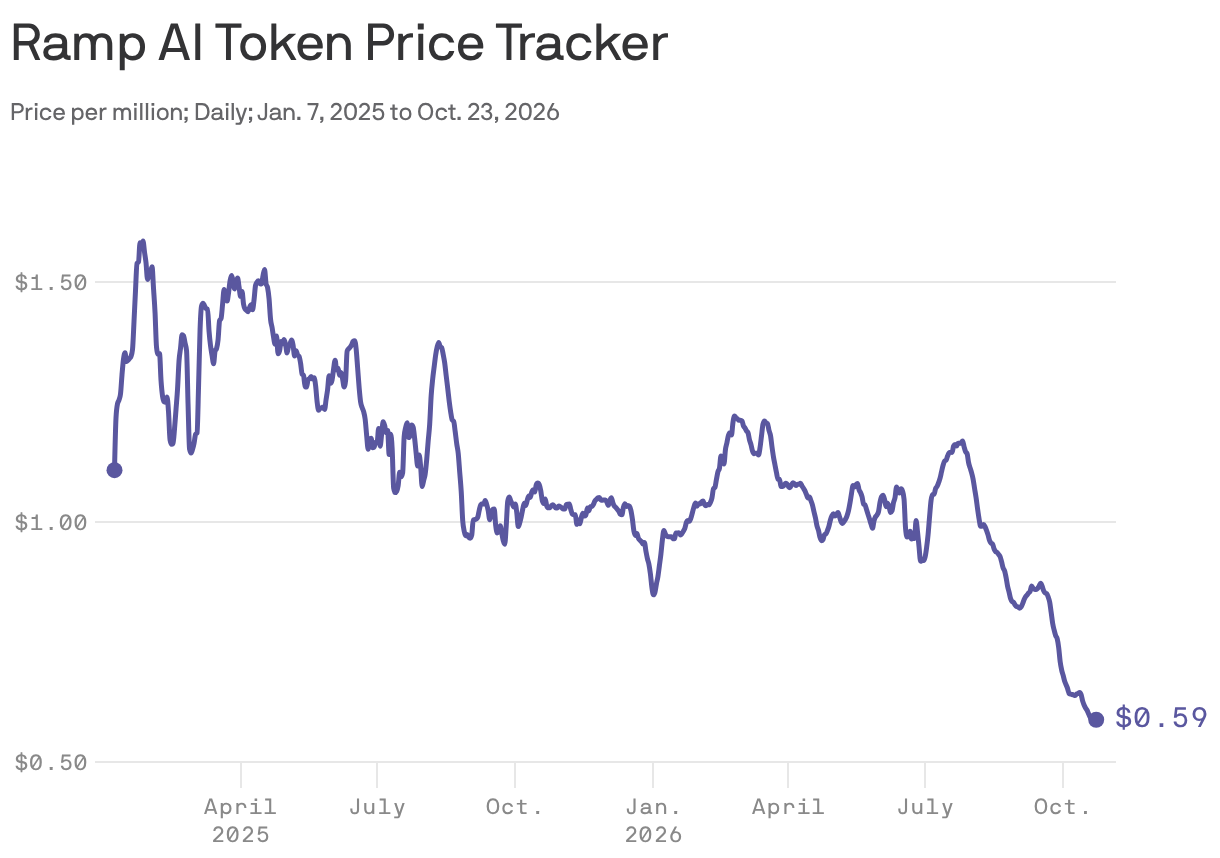
Data: Ramp. Chart: Axios/Matt Phillips
The price companies pay for AI tokens has plunged roughly 35% since the end of June, Axios' Matt Phillips writes from Ramp's AI price index.
- Why it matters: Falling prices for tokens — a basic unit of AI usage — raise questions about the strength of demand for AI and how much revenue the data center boom will ultimately generate for investors.
Get Axios Markets.
5. 🇧🇷 Trump opens door for Bolsonaro
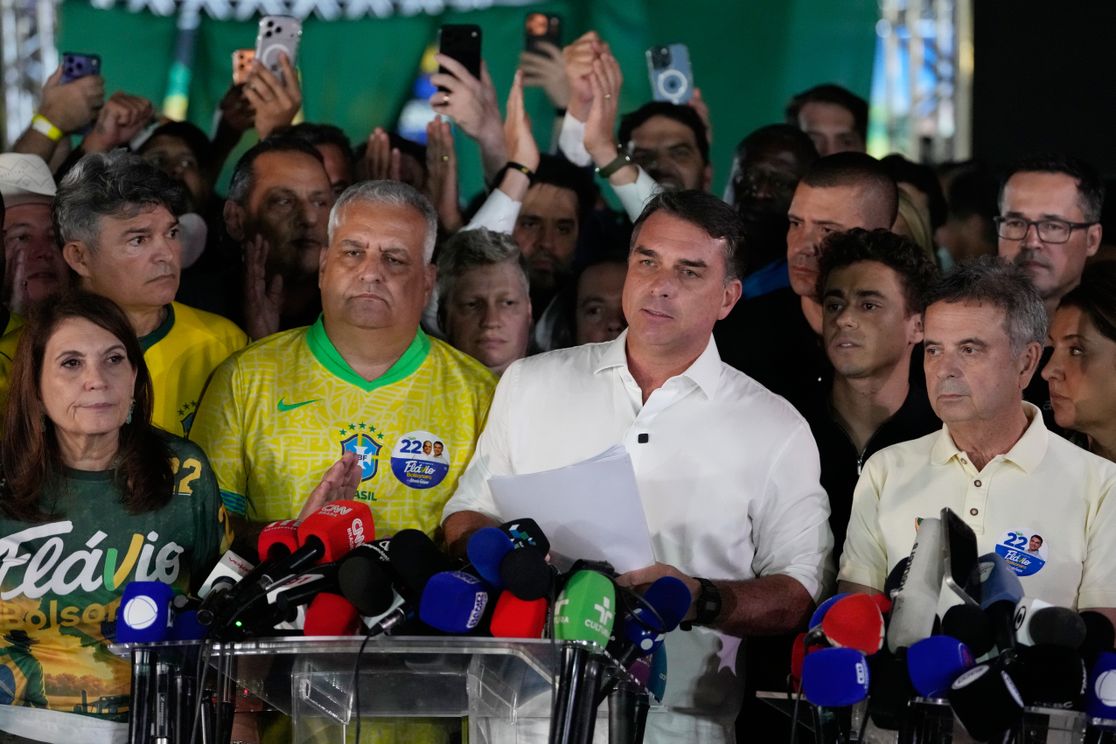
Flávio Bolsonaro speaks Sunday in Brasília, Brazil, after the presidential runoff. Photo: Eraldo Peres/AP
The U.S. government is granting visas to Flávio Bolsonaro and his family following his defeat in Brazil's presidential election, a senior Trump administration official tells Axios' Marc Caputo and Rebecca Falconer.
- Why it matters: The move comes days after Brazilian President Luiz Inácio Lula da Silva defeated Bolsonaro, the son of former President Jair Bolsonaro.
Following the election, Brazil's Supreme Court ordered Bolsonaro to surrender his passports and barred him from leaving the country.
- The order stems from an ongoing investigation into alleged money laundering. Bolsonaro has denied wrongdoing.
🔭 Zoom out: President Trump and his administration have repeatedly backed the Bolsonaro family, with the president denouncing the prosecution of the elder Bolsonaro as a "witch hunt."
- Trump suggested Brazil's election was "rigged."
Keep reading.
6. 🛰️ Musk-proofing modern warfare
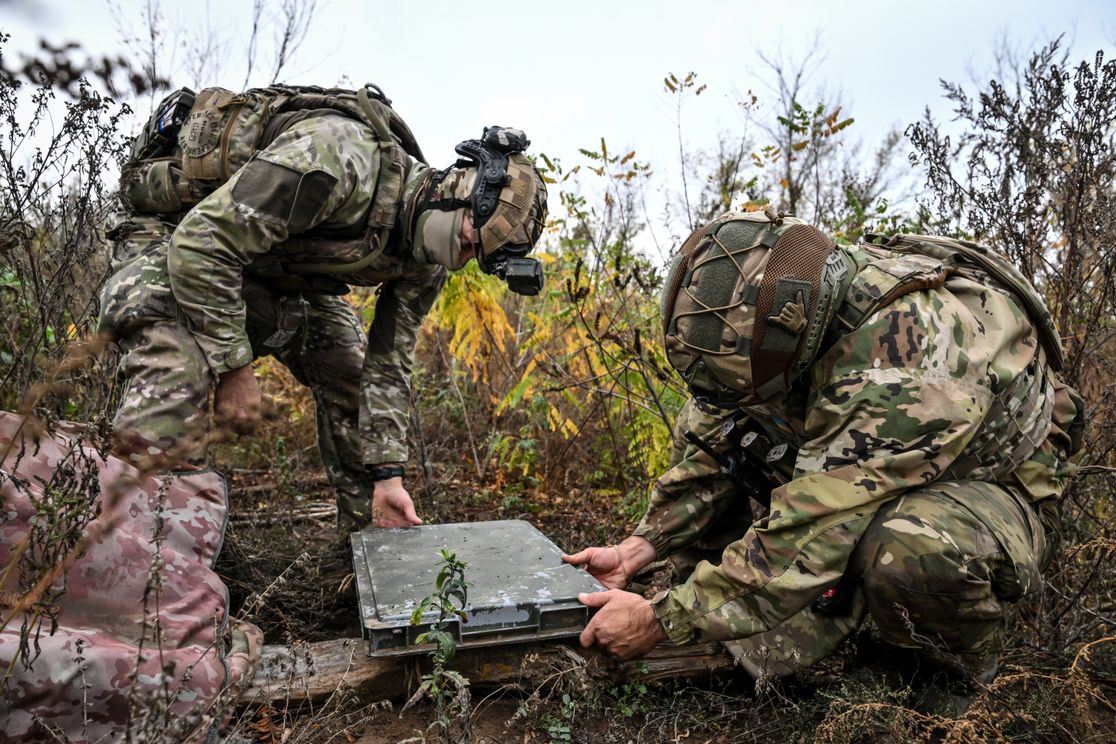
Two men set up a Starlink terminal in the Donetsk region of Ukraine. Photo: Dmytro Smolienko/Ukrinform/Future Publishing via Getty Images
Axios' Thomas Novelly and Colin Demarest, authors of our twice-weekly Future of Defense newsletter, write:
Rival satellite companies are jockeying to loosen Elon Musk's grip on battlefield communications after his company's restrictions on Ukraine's Starlink service shook officials in Europe and the U.S.
- Why it matters: The episode, which temporarily disrupted Ukraine's drone usage, shows how vulnerable a military can be to the whims of a single company or market dominator.
🌌 The big picture: Musk's SpaceX, which is the parent company of Starlink, is by far the world's leader in space-based connectivity with more than 11,000 satellites.
- Eutelsat, a French firm, is behind them with more than 600 satellites.
- SpaceX's massive lead has made it difficult for European countries that want to establish independence from the Musk-led company.
🔭 Zoom in: Now, non-U.S. firms seeking to compete with SpaceX are pitching their services with more urgency.
- Last week, Finnish firms ICEYE and Nokia announced an agreement with Ukraine's defense ministry to explore "sovereign satellite communications."
7. 🤖 AI's Y2K moment
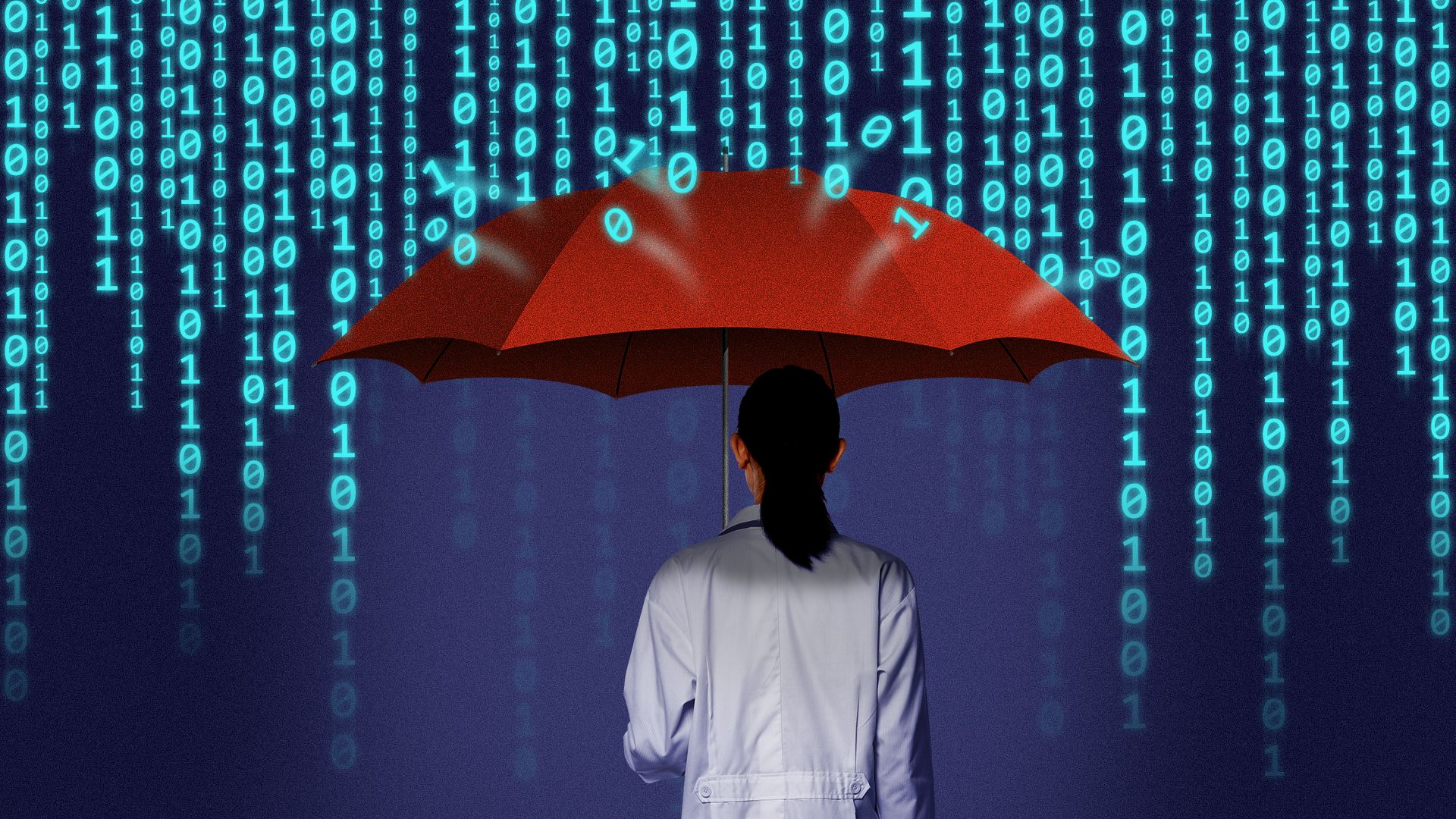
Illustration: Sarah Grillo/Axios. Stock: Getty Images
The AI-discovered software flaws that sent the cybersecurity world into a panic last week have so far led to surprisingly few successful attacks, Axios' Sam Sabin writes.
- Why it matters: Hackers have made millions of attempts to exploit bugs that OpenAI agents found in PHP, software used by roughly 70% of websites. The flaws have proven unusually hard to weaponize, and companies' rush to patch them appears to have helped.
The past week has unfolded in ways that remind some researchers of Y2K, a feared software crisis in 1999. Warnings of Armageddon helped rally companies to engineer a solution.
8. 🎃 1 fun thing: Pumpkin Picasso

Farmer Mike Valladao carves a pumpkin at the Safeway World Championship Pumpkin Weigh-Off in Half Moon Bay, Calif., this month. Photo: Jeff Chiu/AP
Mike Valladao — a systems engineer at a cybersecurity company in the Bay Area — has spent four decades moonlighting as "Farmer Mike," the "Picasso of Pumpkin Carvers."
- He's sculpted hundreds of gourds into ghoulish faces, seaside landscapes, witches, dragons and pop culture figures like Yoda and Charlie Brown.
Valladao uses Atlantic pumpkins weighing 100 to 1,000 pounds. They have thick skins that allow him to cut protruding facial features shallow or deep.
- The photo above shows Valladao carving at this month's 53rd Safeway World Championship Pumpkin Weigh-Off in Half Moon Bay, Calif., where his family opened the first feed and seed store in the 19th century.
Go deeper.